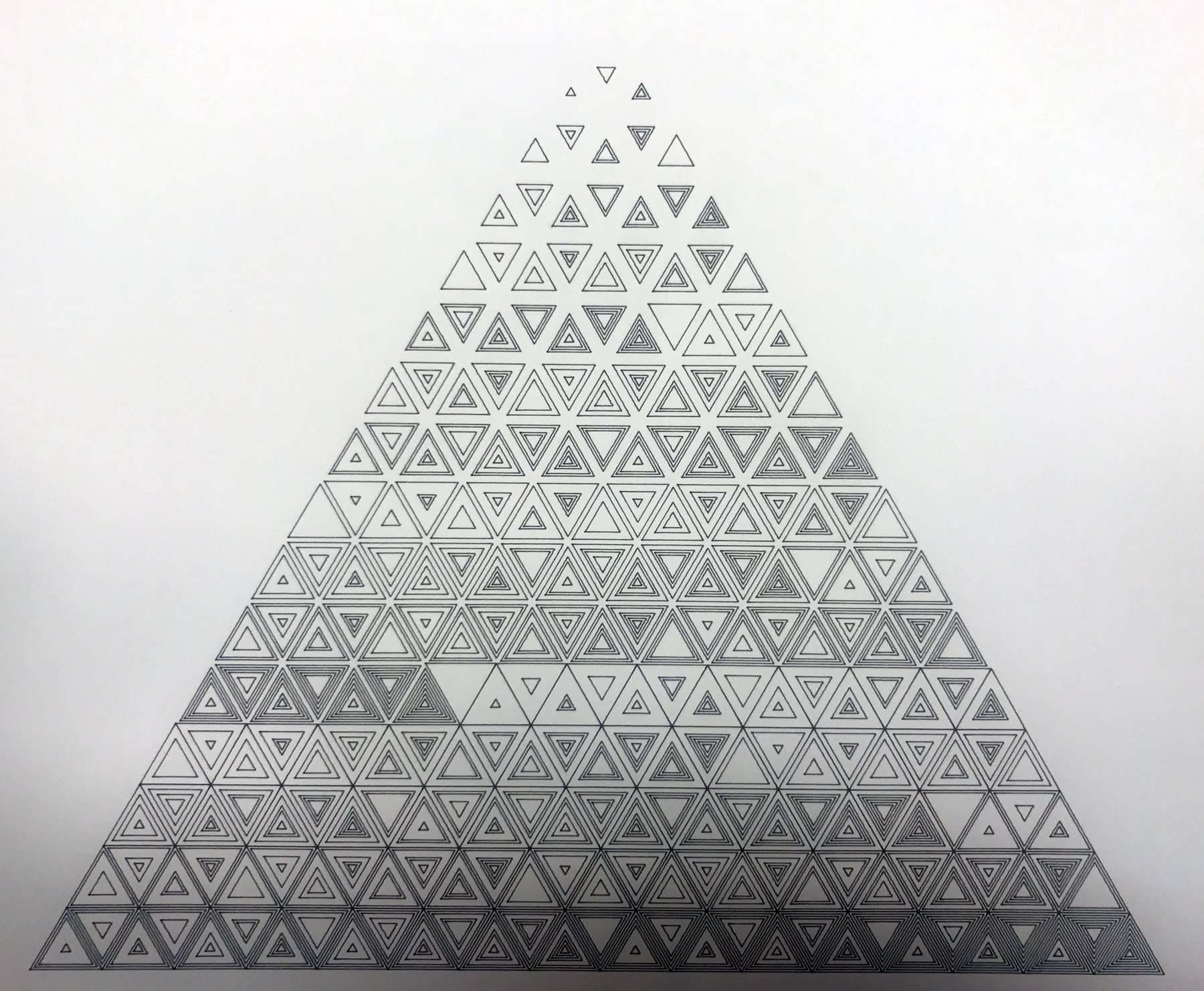
09-01
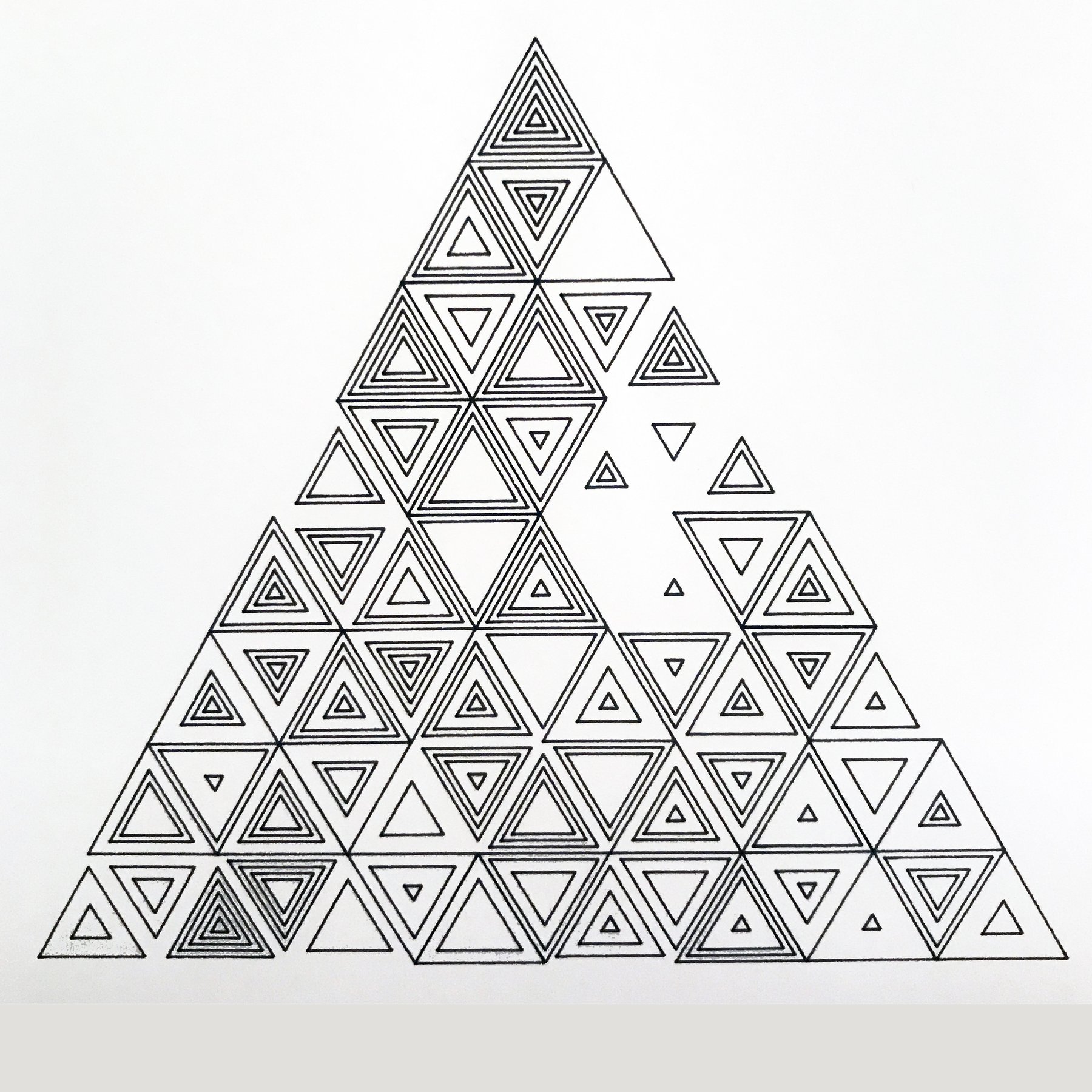
8 bits triangles, black on white, in sequence
28 = 256 triangles
- Colour
- black on white
- Order
- in sequence
- Paper
- Canson XL Bristol, A4
- Pen
- black pigmented fineliner
- Dimensions
- 22 × 19 cm
All series ‹ Previous series Next series ›
binary, 3 plots
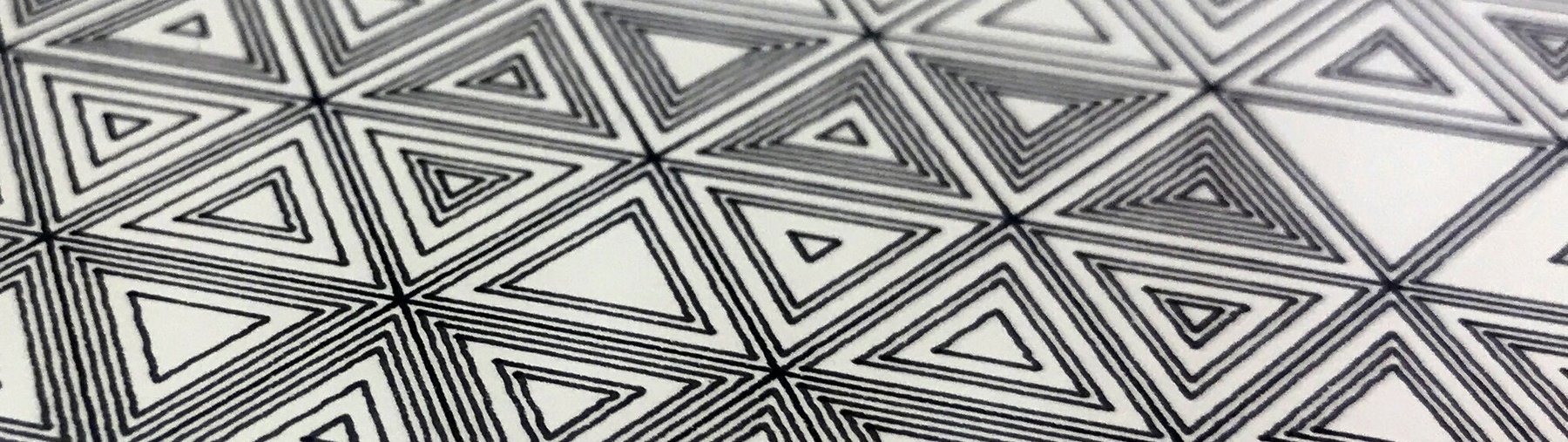
If you place equilateral triangles in a triangular pattern you get one in row one, three in row two, five in row three, seven in row four and so on. In every row an odd number of triangles is added. It is not very hard to prove that if you add the first n odd numbers you get n2(Σ2n-1=n2). With an 8 bits number you get 28 = 256 numbers. The square root of 256 is of course 24 = 16 so you can make a triangle with 16 rows! Well. That's the mathematical story. Maybe you just like them.
09-01
28 = 256 triangles
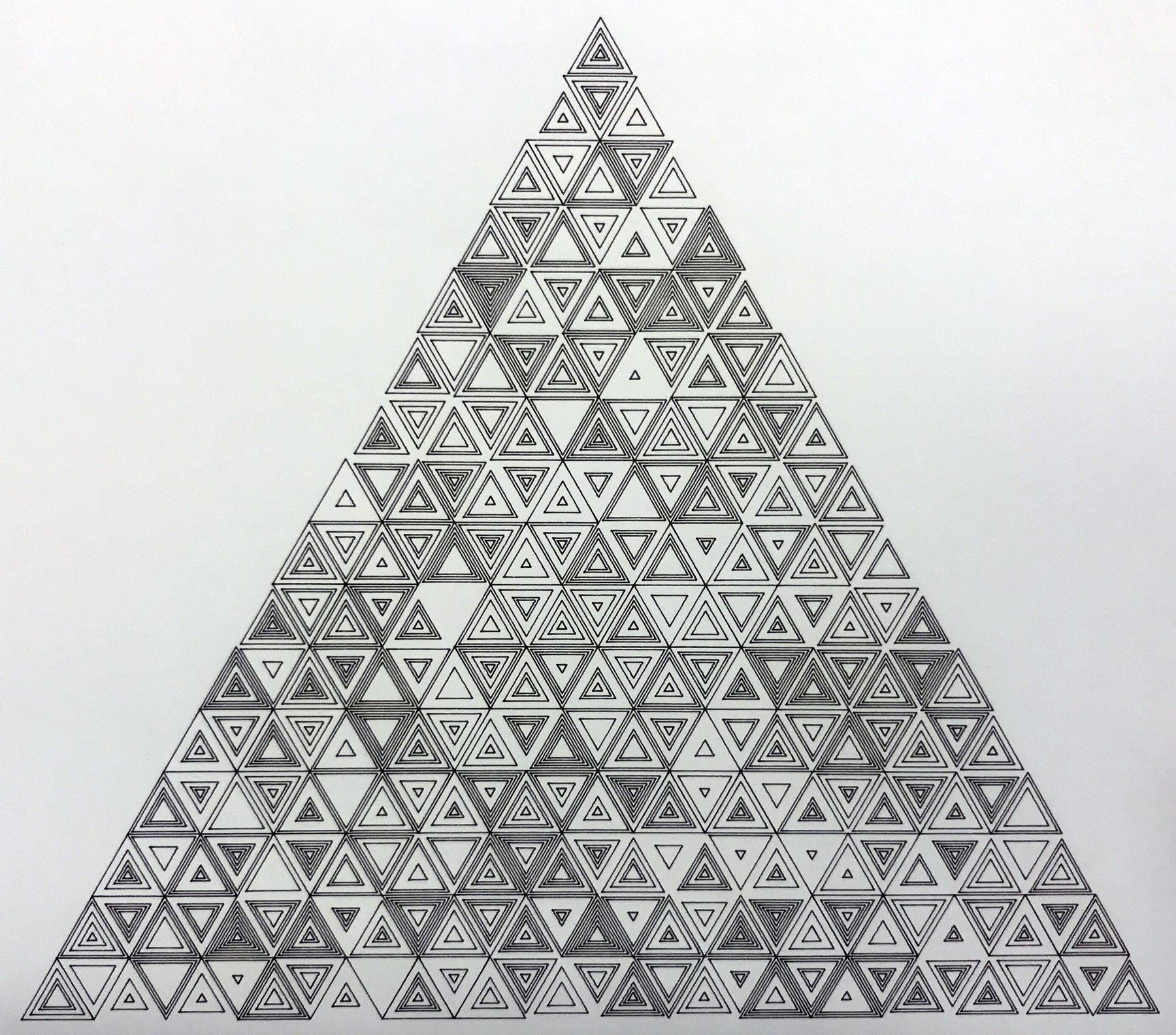
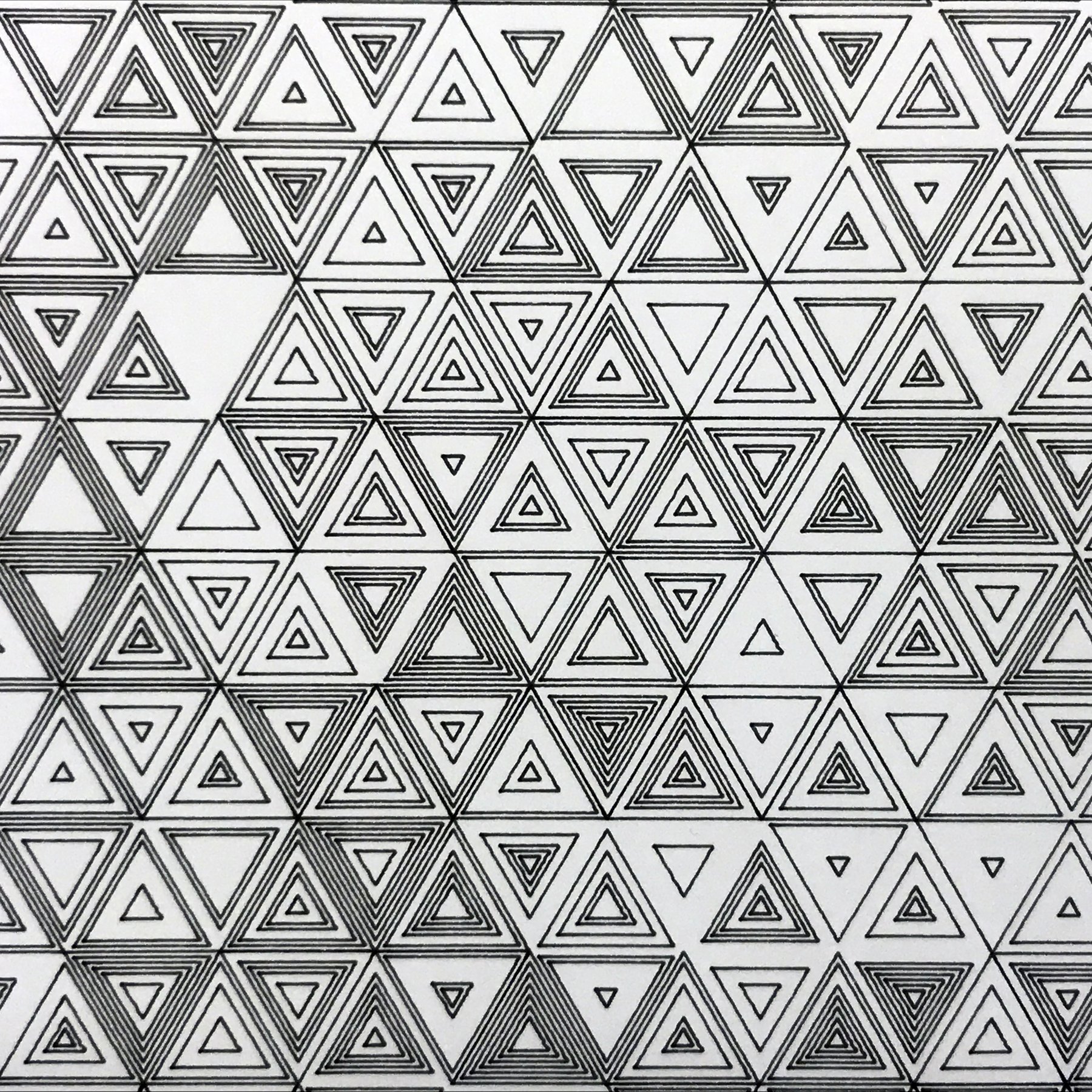
09-02
28 = 256 triangles
26 = 64 triangles