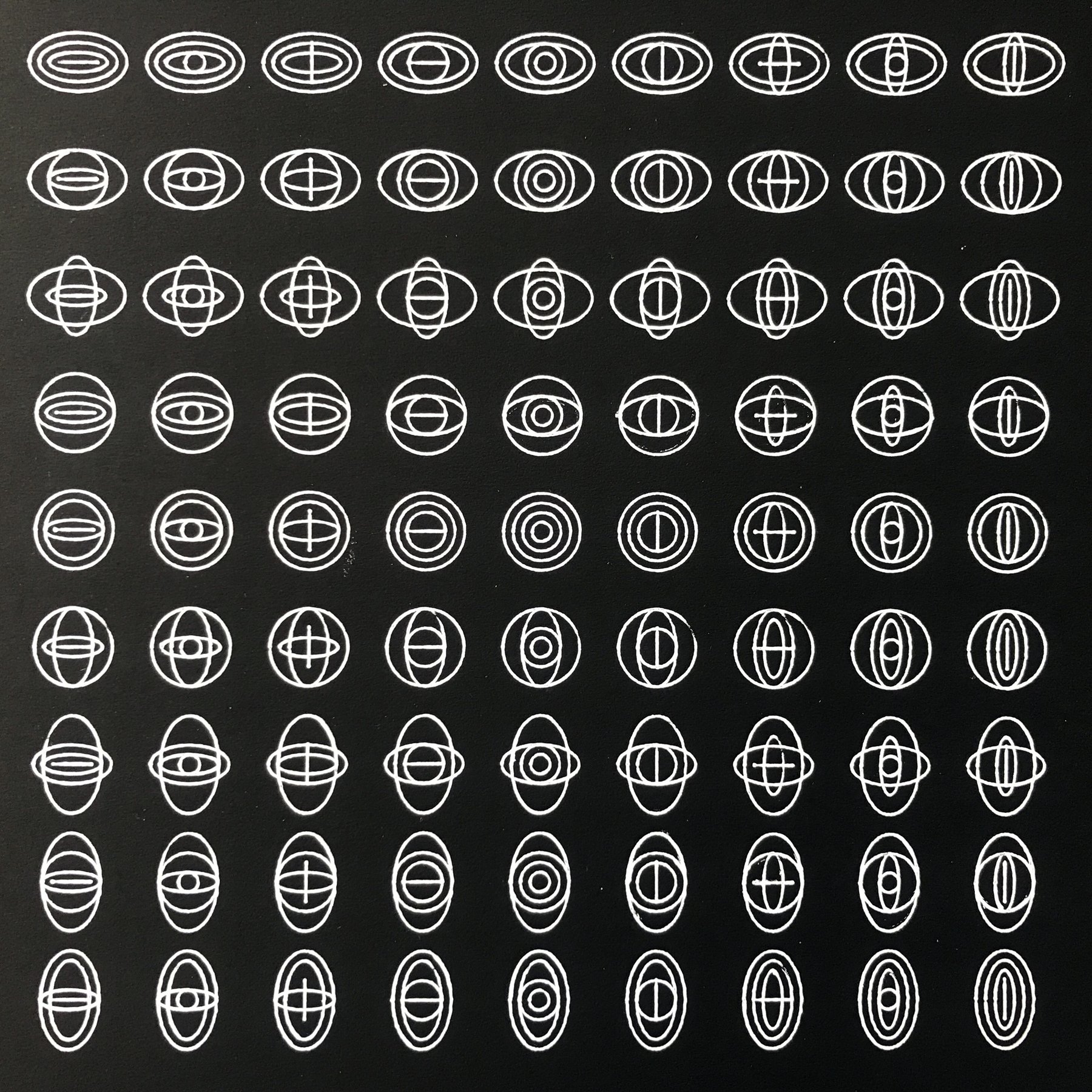
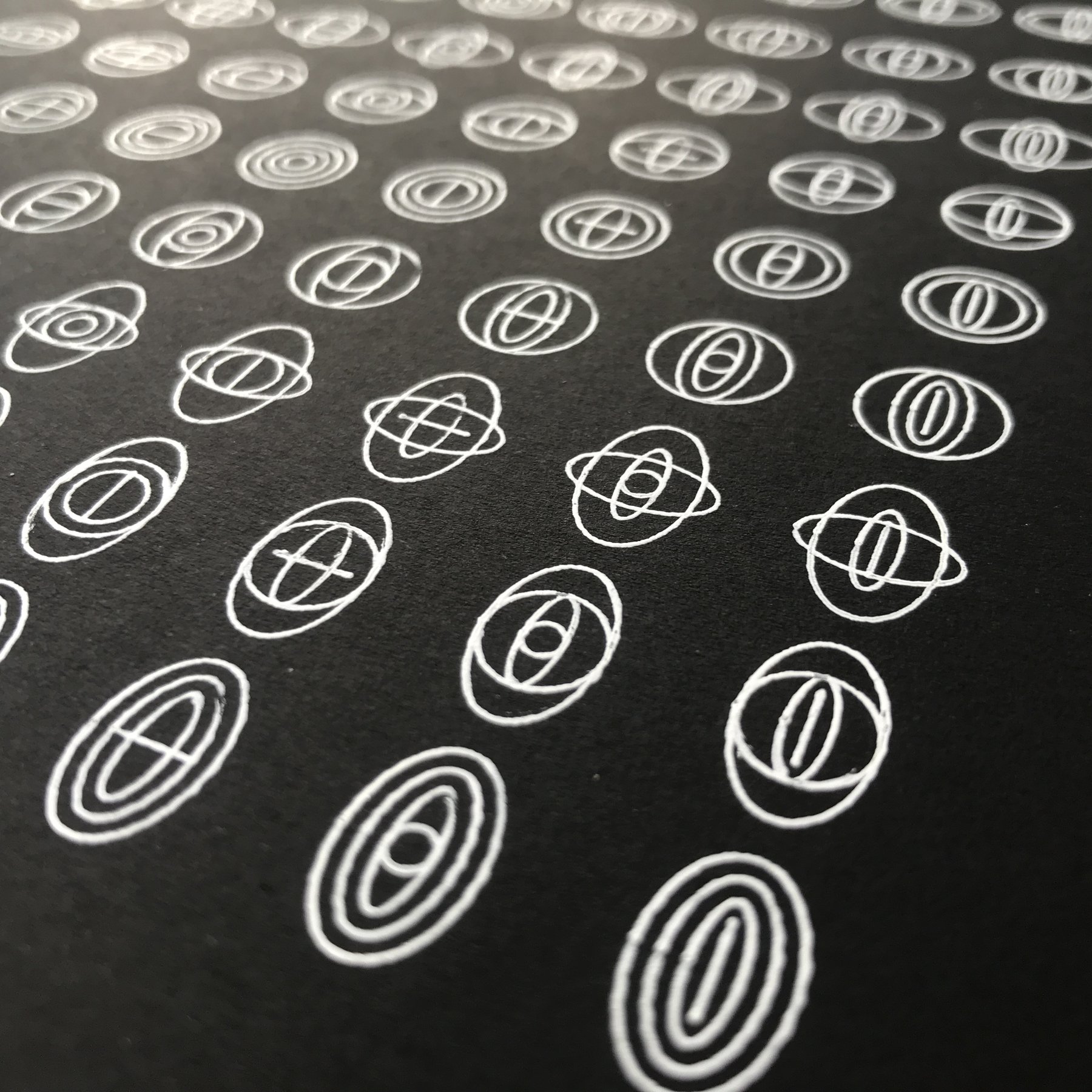
14-01
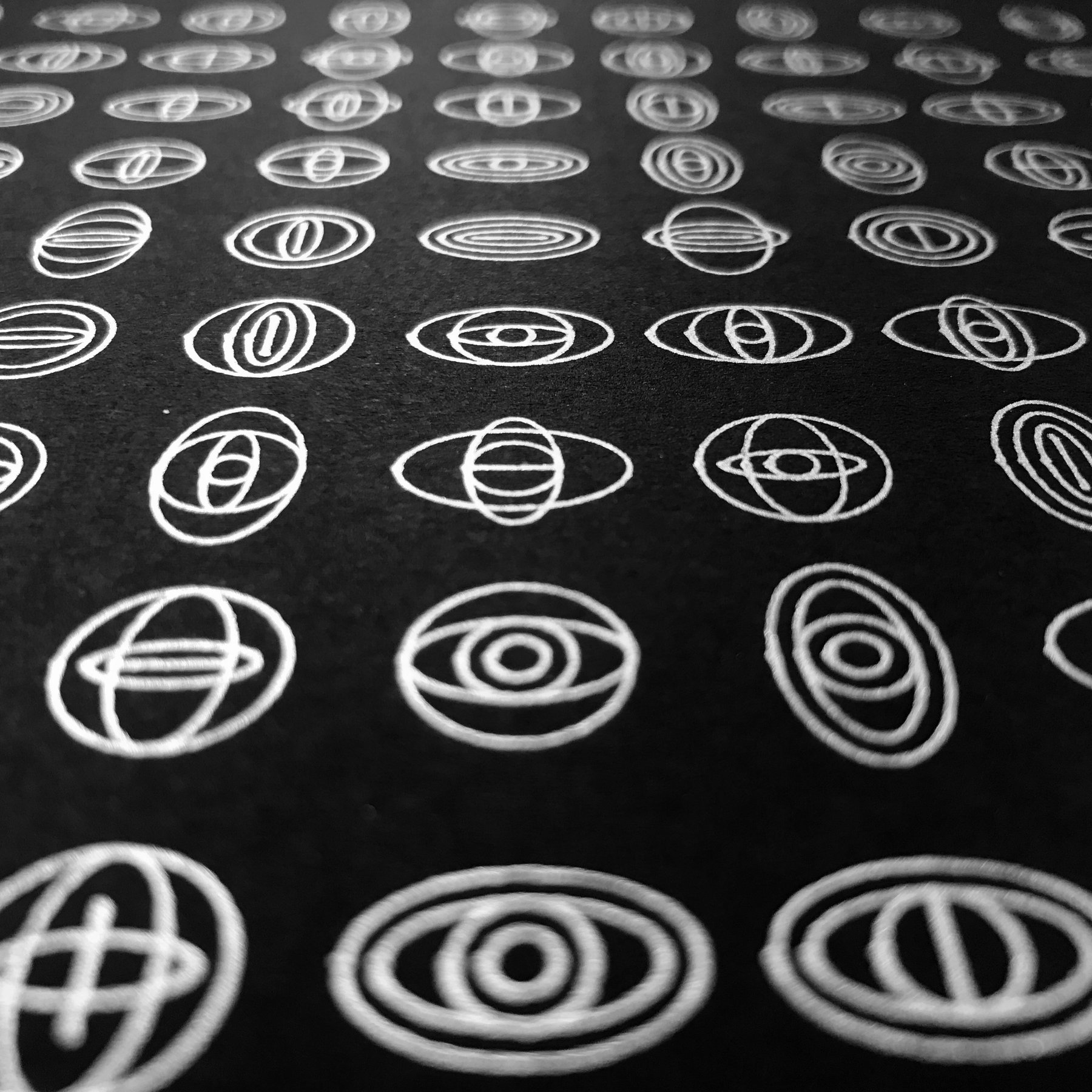
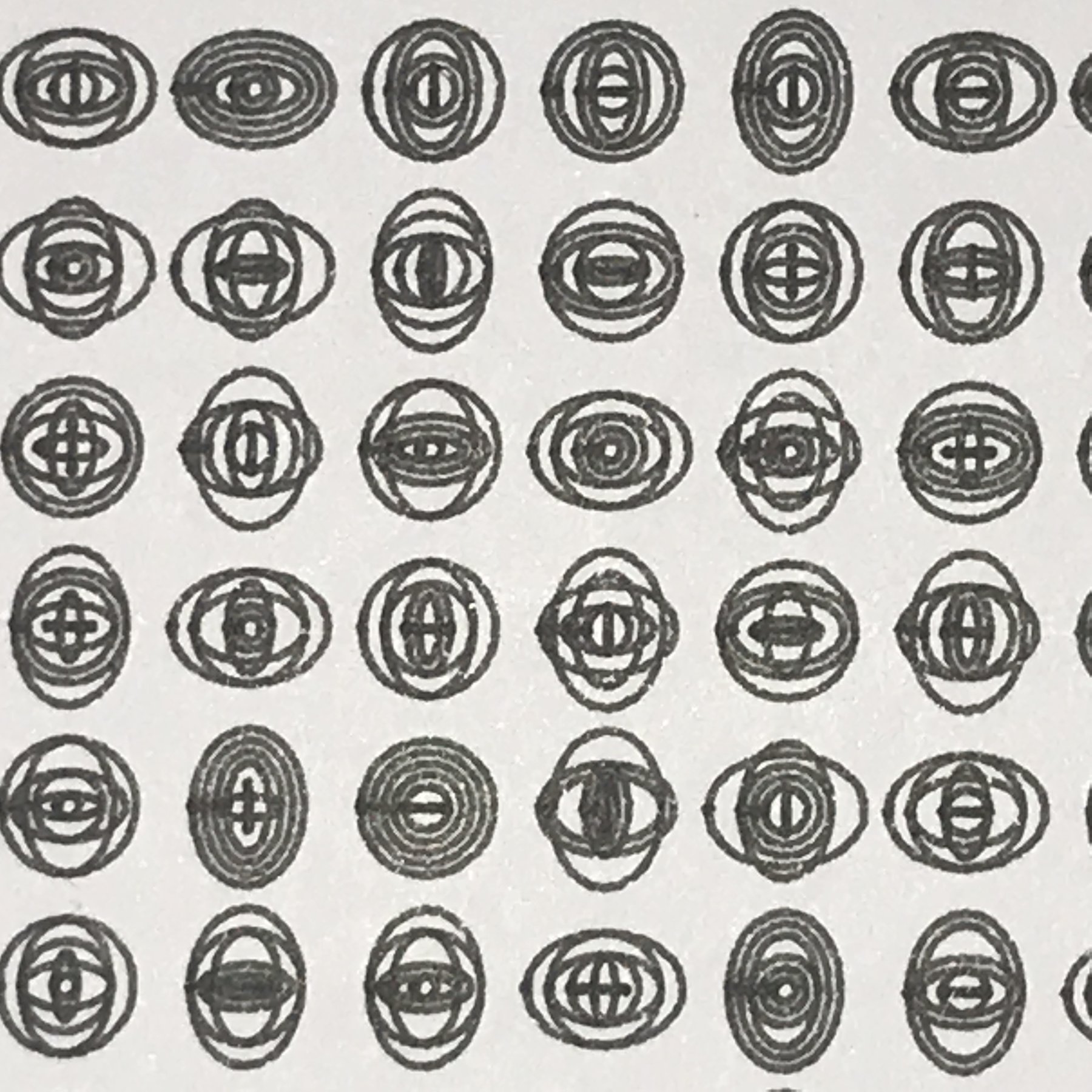
4 trits circles and ellipses, white on black, in sequence
34 = 81 elements
- Grid
- 9 × 9
- Colour
- white on black
- Order
- in sequence
- Paper
- Fabriano Black Black 300 g, A4
- Pen
- silver pen (Mitsubishi Uni-ball)
- Dimensions
- 15 × 15 cm
All series ‹ Previous series Next series ›
ternary, 4 plots
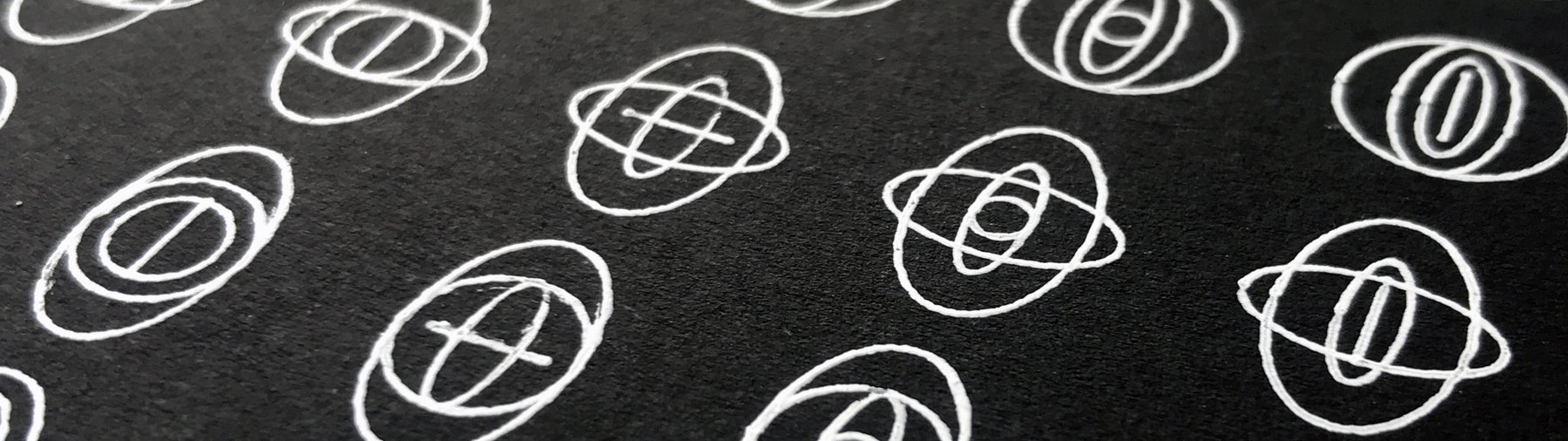
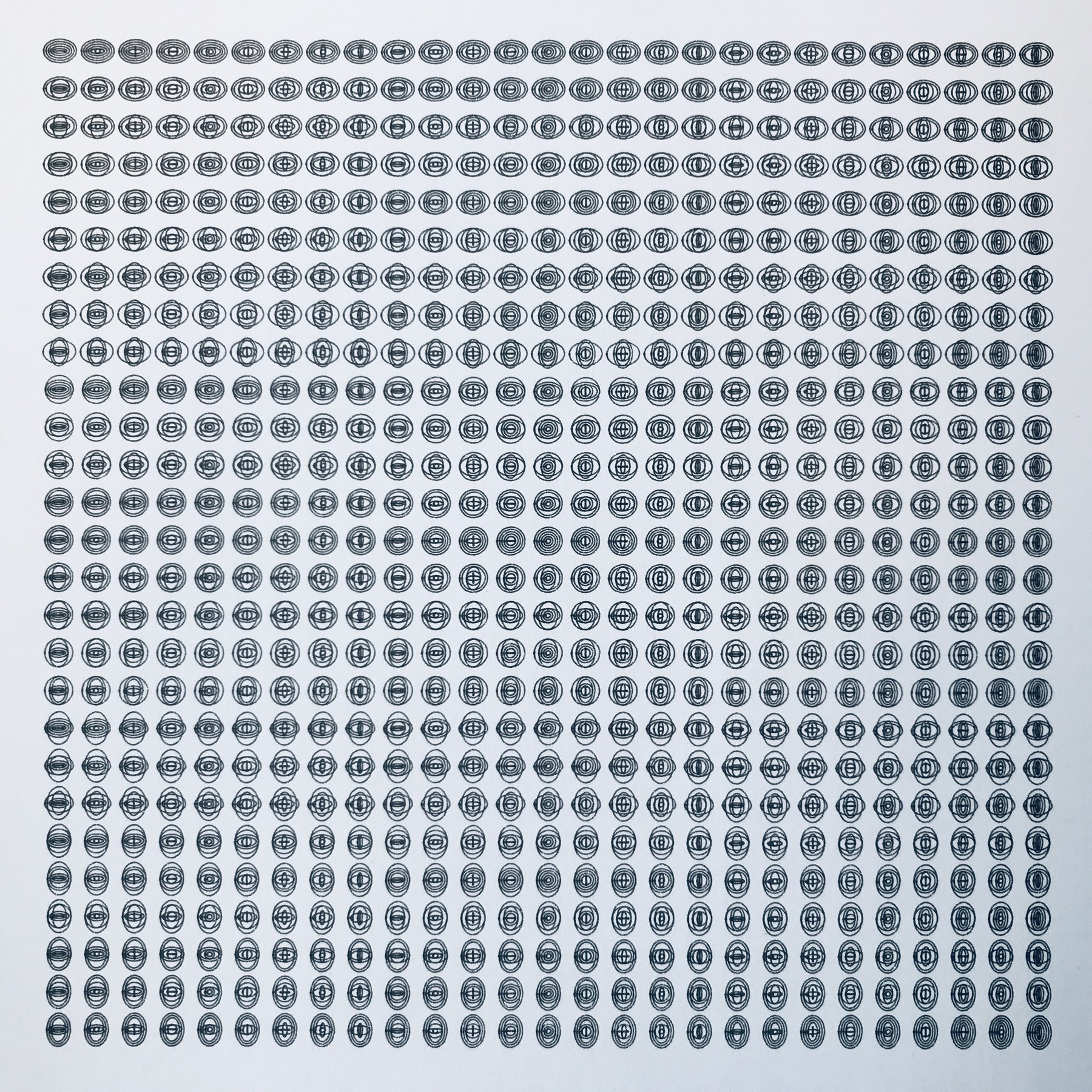
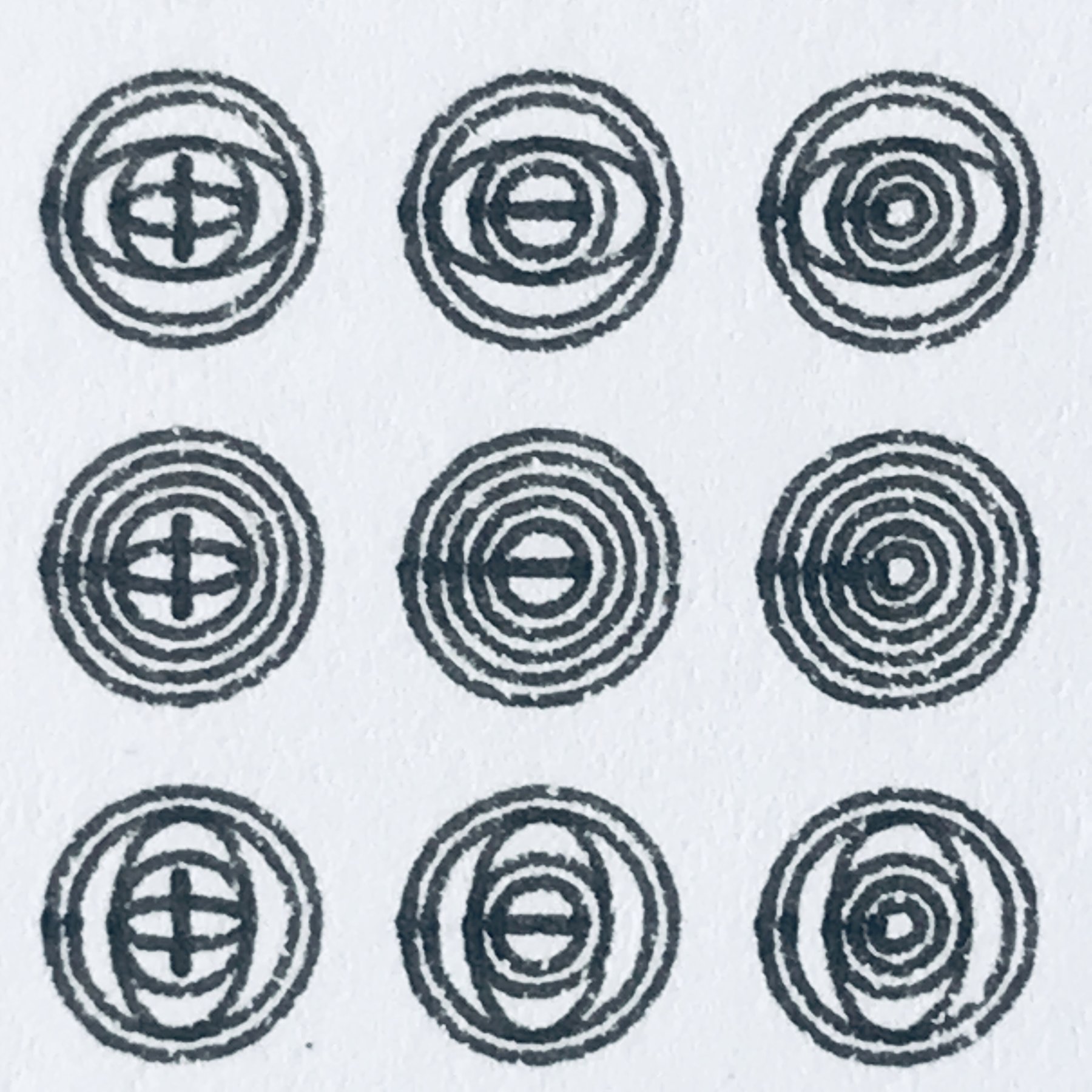
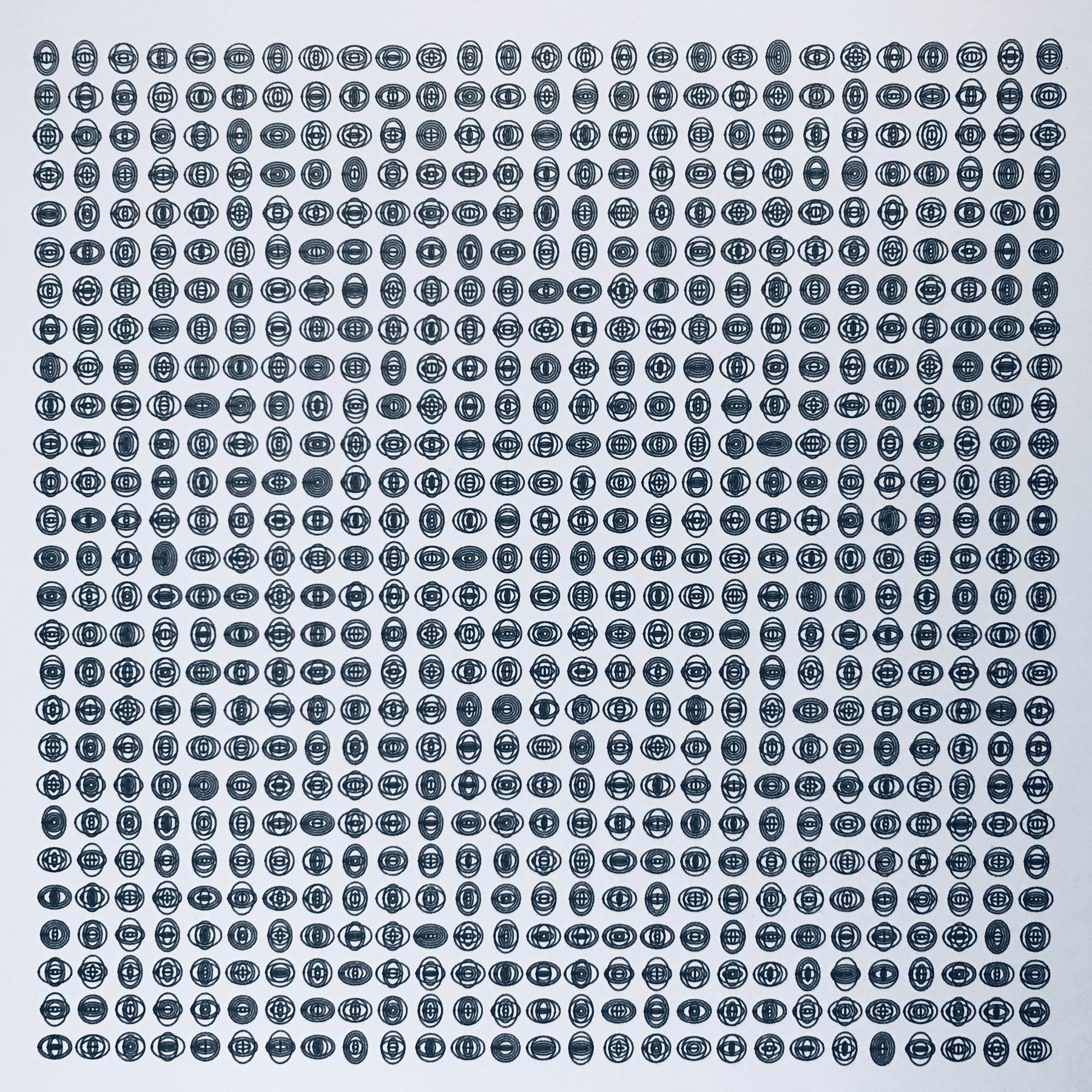
When you make a ternary plot you have to make two decisions: how do you represent the three states and how do you deal with the consecutive trits. The starting point are the "balanced ternary numbers" so I have to give the "T" (-1) and the "1" (1) a sort of contrast and the "0" (0) a middle position. I made the decision to make ellipses. A flat, "landscape" ellipse for the "T", a high, "portrait" ellipse for the "0". For the consecutive trits I choose to plot ellipses that increase in size (the same way as I did with the binary plots).
14-01
34 = 81 elements
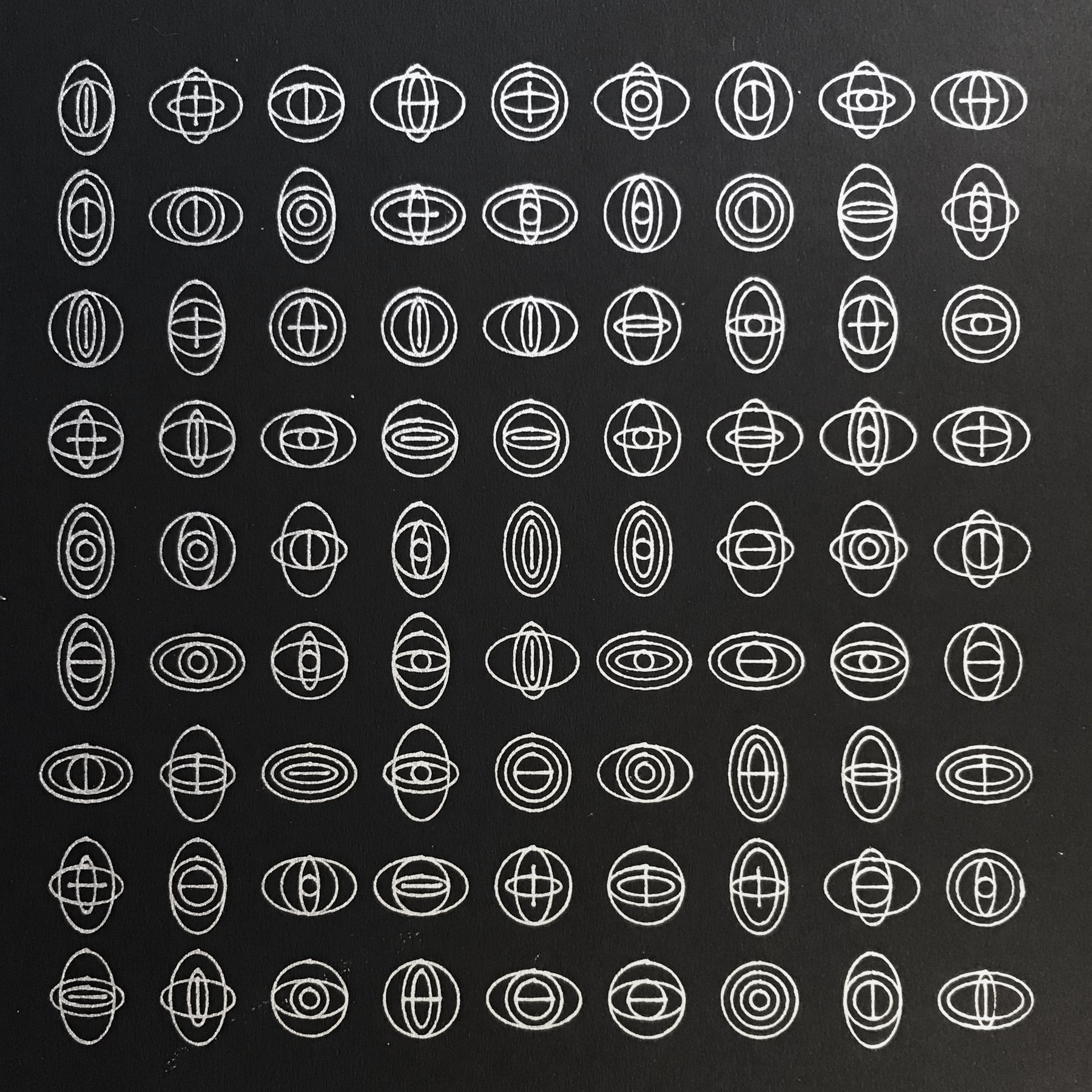
14-02
34 = 81 elements
14-03
36 = 729 elements
14-04
36 = 729 elements